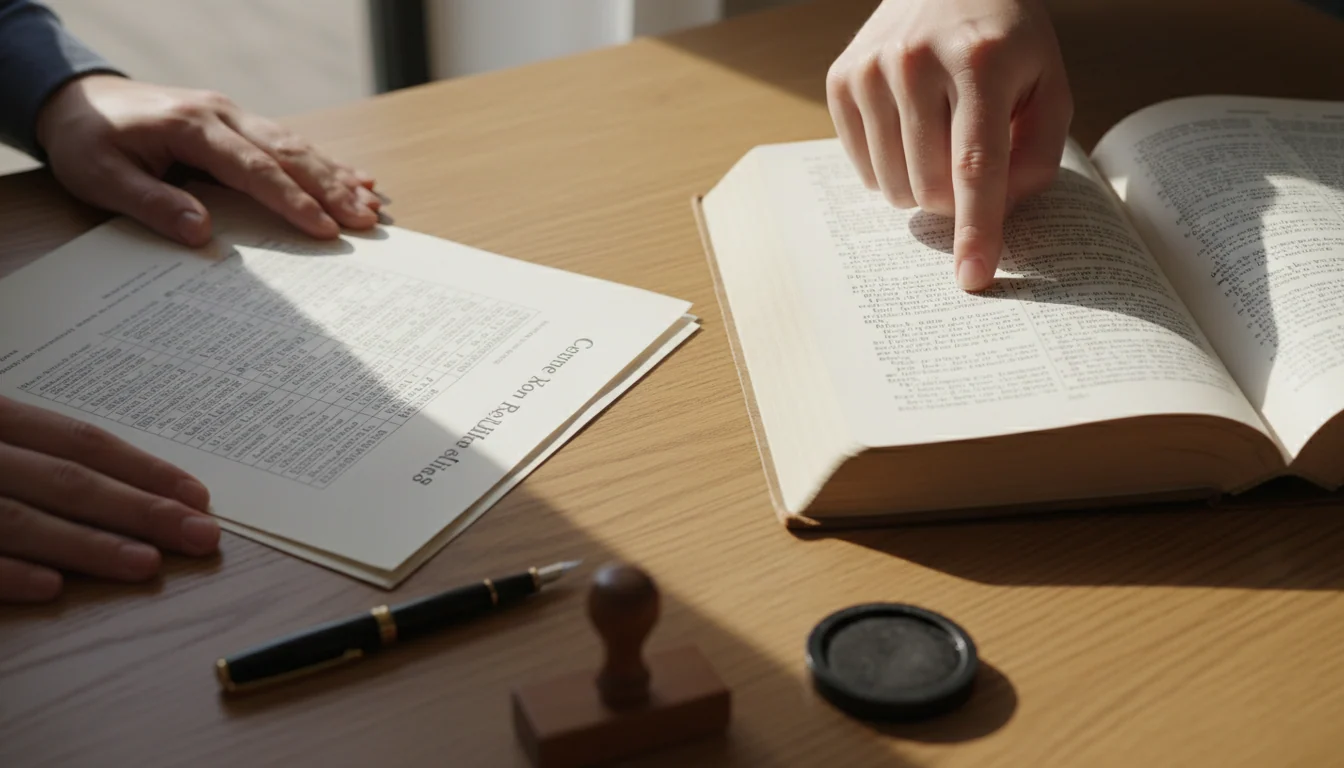
The rulings by the Sixth Circuit and a Mississippi federal court underline that lawyers remain responsible for verifying the source citations in filings they submit, even when AI has been used. The cases described show that a signer must appropriately check the source and its fit with the cited proposition.
On 13 March 2026 the United States Court of Appeals for the Sixth Circuit in Whiting v. City of Athens, Tennessee sanctioned lawyers after it found more than two dozen fictitious citations and factual misrepresentations in their appellate briefs. The court treated the fictitious authorities and unsupported citations as misrepresentations of the law and sanctionable misconduct amounting to an abuse of the process, and that the substantive correctness of some legal propositions does not justify it. In addition to reimbursement of the appellees’ reasonable attorneys’ fees and double costs, the court ordered each attorney to pay a separate $15,000 sanction to the court registry; the lawyers had moreover previously been asked to explain themselves in a show-cause proceeding.
What did the Sixth Circuit decide about fictitious AI citations in Whiting v. City of Athens?
The court found more than two dozen fabricated or otherwise defective citations, including references to non-existent cases, quotations not appearing in the cited sources, and citations that did not support the propositions for which they were offered. It based the measures on Federal Rule of Appellate Procedure 38 and on its own inherent authority. The core of the reasoning is that the existence of a correct legal rule elsewhere in the filing does not make up for the presence of fabricated authority: responsibility for what is in the file rests with the person who submits it.
Do co-counsel who only sign a filing also risk sanctions?
Yes. In a separate case the United States District Court for the Northern District of Mississippi, on 8 June 2026 in Withers v. City of Aberdeen, imposed sanctions under Rule 11 against four lawyers who had not checked AI-generated or AI-assisted citations. The court also addressed local co-counsel who signed the filings without verifying the cited authorities themselves.
The measures included revocation of pro hac vice admission, a two-year bar on appearance in the district for the out-of-state lawyers, disqualification from the case, monetary sanctions, AI-related training for one attorney and referral for possible disciplinary review. In our assessment this is the most important signal for Dutch and international firms: in these cases a signature on a court filing was treated as responsibility for the sources cited in it, not as a mere administrative formality. In our analysis, Withers shows that even a co-counsel who did not use the AI tool themselves is at risk when they sign a filing without appropriately checking the cited authorities.
Why is an automatic verification tool not a final check for legal sources?
Because the hardest errors are precisely the subtle ones. Researchers report in this arXiv benchmark that systems continue to struggle with subtle error categories, including incorrect pincites, misquotes and substantive misrepresentations, even when simpler forms of source hallucination are detected more readily. Agentic verification improved recall, but the reported performance remained imperfect; the benchmark reports configuration-dependent results, including an 84.4 per cent recall and 55.0 per cent F1 score for GPT-5 in an agentic framework. The benchmark also reports that limited access to legal databases constrains verification performance.
Legal source hallucinations take several forms. A usable checking protocol follows the chain from existence to meaning:
- does the cited case actually exist?
- do the party names match the reporter or database reference?
- does the pinpoint point to the passage being cited?
- does the quotation appear verbatim in that passage?
- does the ruling genuinely support the specific legal proposition, in context?
Checking verbatim quotations and the substantive support for a legal proposition is among the error types that, according to the study, automatic detection struggles with particularly. Our reading: Our reading is that a tool can speed up the existence check and flag discrepancies, but the link between source, quotation, pinpoint and legal rule still requires human review. Placing an independent check between AI analysis and formal reporting catches errors that a single automated pass misses.
What does this mean for directors, lawyers and CISOs who use AI in legal work?
Our analysis is that the sanctions described are a strong reason for firms to adjust their signing procedure; every submitter should have a signed-off source check before signing, including for filings a colleague drafted. Our analysis: because the Mississippi court also sanctioned local co-counsel, local co-counsel who merely co-sign can still bear independent procedural risk when they do not check the sources; that is why, in our assessment, it is wise for a firm to record in writing who verified which source before a second name goes on the filing. Because the Princeton research reports that incorrect pincites and substantive misrepresentation are poorly caught by tools, our analysis is that managers should not base a verification statement on tool output alone; that is why the file should contain, per citation, the human reviewer and their judgement. Our analysis is that, precisely because the cases described show that verification by lawyers can be questioned after the fact, an audit trail that records what check was carried out and by whom is an important firm-control measure. Our analysis: lawyers and CISOs can therefore jointly record which source, which model output, which verification status and which final judgement belong together, without exposing confidential case content more widely than necessary.
Concretely, this leads to a short agenda for firms using AI in AI in professional legal practice:
- Make source checking a separate, signed-off process step before signing, distinct from drafting.
- Record, per citation, who checked existence, pinpoint and substantive support.
- Treat a tool signal as an aid, not as a final judgement, especially for pincites and paraphrases.
- Connect this to the GDPR accuracy principle in generative AI, so that accuracy becomes a testable workflow requirement.
For anyone considering purchasing legal AI systems, this strengthens the requirements placed on the supplier. Weigh up what to verify before deploying legal AI and deliberately choose one hub to follow this subject via AI in professional legal practice. The professional final judgement — and the signature — remain with the lawyer in any case.
Sources and references
Sources: The article relies on the Sixth Circuit's ruling in Whiting v. City of Athens, the sanctions order in Withers v. City of Aberdeen and benchmark research by Princeton researchers on arXiv.