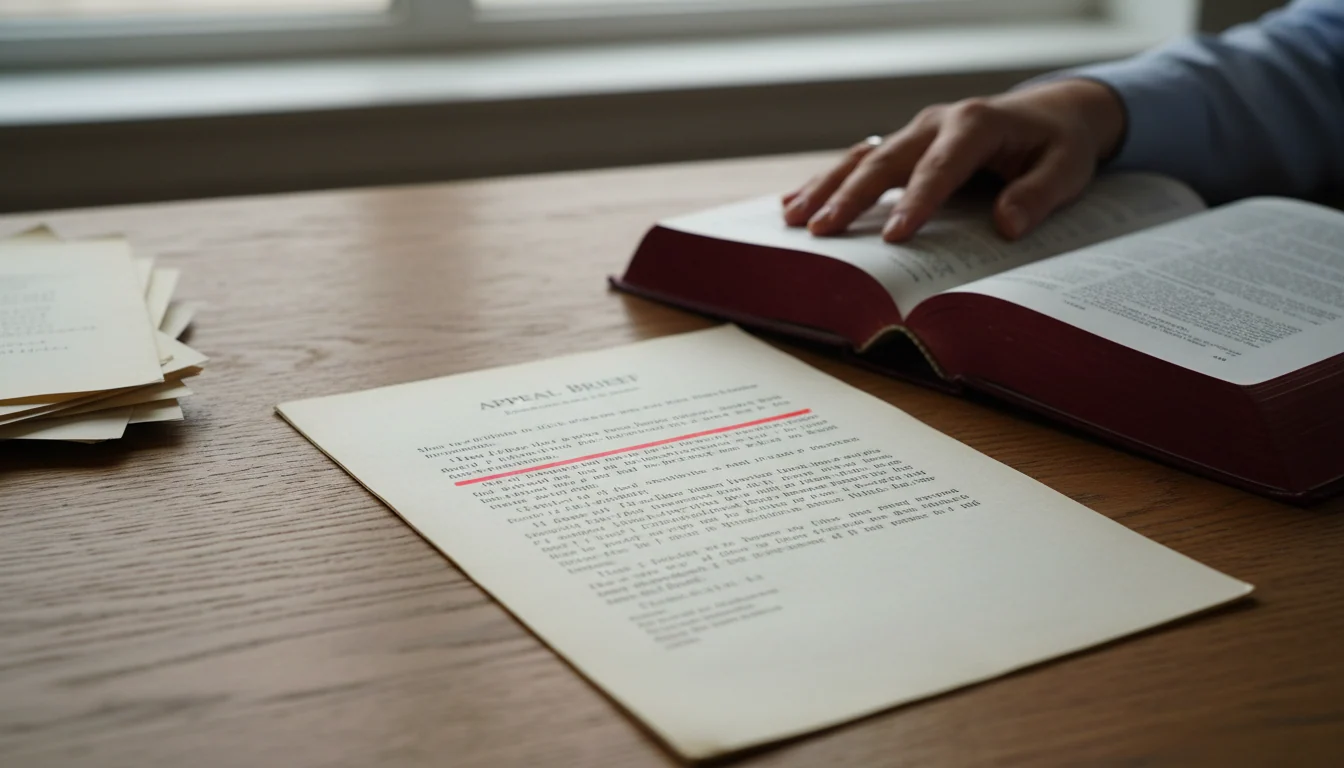
Yes. The Fifth Circuit sanctioned a lawyer who filed an AI-drafted appeal brief with fabricated and incorrect citations without verification. Never treat AI output as evidence: link each individual claim to a primary source passage, have it independently checked and demonstrably record the human final judgement.
On 18 February 2026, the United States Court of Appeals for the Fifth Circuit imposed a sanction of 2,500 dollars on a lawyer. She had used generative AI to draft a substantial part of an appeal brief, had not checked the content and thereby filed incorrect citations, fabricated references and factual misrepresentations. In the ruling in Fletcher v. Experian, the court stressed that existing professional and procedural rules apply in full, even when AI produces the text.
Our analysis: the ruling focused on the lawyer’s failure to verify AI-generated content and the resulting unsupported or inaccurate material, rather than treating AI use alone as sufficient for a sanction. That distinction determines what professionals now need to put in place.
What did the Fifth Circuit decide about a lawyer who filed unchecked AI citations?
The court found that the lawyer used AI in drafting the appeal brief, did not verify its accuracy and thereby brought fabricated citations and incorrect statements of law before the court. It imposed a fine and made clear that the signatory's responsibility does not change because of the tool. According to the ruling, several citations and assertions were not supported by the underlying legal sources, despite their apparently authoritative form.
Why do language models produce plausible but incorrect source references?
Language models predict probable language; they do not prove truth. As a result, they can generate a credible-looking source reference that does not exist or is substantively wrong. A peer-reviewed evaluation in neurocritical care makes that concrete.
In that study, Hallucination Rate of Peer-Reviewed Citations Generated by Large Language Models in Neurocritical Care, 165 of 300 references generated by three language models contained an inaccuracy and 85 were entirely fabricated. Importantly: these figures apply specifically to zero-shot, retrieval-free web interfaces without linked sources, and should not be read as a universal error rate for all models or workflows. In our analysis, the risk in specialised subjects with thin or fragmented source coverage deserves extra attention, but the supplied study shows no general ranking of risks across domains.
Why does a general warning about hallucinations not protect against wrong decisions?
A disclaimer shifts the check to the user, but does not ensure that this check actually happens. A recent academic review of organization-backed AI advisors distinguishes scepticism, factual verification and their influence on trust, and concludes that general warnings have weak or mixed effects in existing research.
The review Hallucinations in Organization-backed AI advisors describes more targeted cues about typical failure points as promising, but also notes that this is still only studied to a limited extent. In our assessment, this means that a lone warning checkbox in policy or tooling is not a defensible control measure: it does not prove that anyone actually tested the output.
What does this mean for directors, lawyers and doctors who use AI in decision-making?
Our analysis: the Fifth Circuit’s case-specific sanction shows that a professional who signs off on or uses AI output cannot assume that responsibility is transferred to the tool; therefore, in our assessment, organizations should assign a mandatory verification step to a competent professional before filing or patient-related use. Our analysis: because fabricated and incorrect citations can look plausible, a reader should not rely on recognition at a glance; instead, check not only whether the reference exists but whether the cited passage genuinely supports the concrete assertion. In our assessment, because general warnings do not reliably produce verification, a disclaimer in an AI policy should not be treated as sufficient evidence that verification occurred; replace it with a demonstrable, per-claim recorded assessment with name, date and outcome. Our recommendation: escalate outcomes with legal, medical or financial consequences to a competent professional in line with your risk policy, and consider a second independent assessment for high-risk decisions before you act.
How do I build a defensible workflow with claim-level verification and source traceability?
The core is that you do not assess the accuracy of the model, but the source support for each individual claim. That means one incorrect reference does not invalidate the entire piece, but is flagged and corrected before anyone builds on it.
- Split the output into individual claims. Assess assertions separately rather than approving a text as a whole.
- Link each claim to a primary or authoritative source passage. A reference without a findable passage does not count as substantiation.
- Have it independently checked whether the passage truly supports the claim. Not whether the source exists, but whether it bears the assertion.
- Explicitly flag contradicted and not-found claims. These never enter a file or document unnoticed.
- Escalate consequential outcomes to a competent professional. The final judgement remains with a human.
- Retain the model version, prompt, source set, raw output, verification decision and correction. This way it is demonstrable afterwards who checked what.
In doing so, keep three things separate that quickly become conflated: factual accuracy, source support and legal responsibility. A claim may happen to be correct and yet lack source support; and even a decision that matches a human reference may be insufficiently supported by sources. The same logic recurs in the growing duty to verify in AI-assisted legal research and in court rulings on liability for chatbot output. Anyone who wants to set this up structurally will find the broader framework in our hub on AI verification and a worked-out model in building a defensible verification chain.
Sources and references
Sources: The article relies on the ruling of the United States Court of Appeals for the Fifth Circuit in Fletcher v. Experian, a peer-reviewed PMC study on hallucinations in neurocritical-care citations and an arXiv review on hallucinations in organization-backed AI advisors.