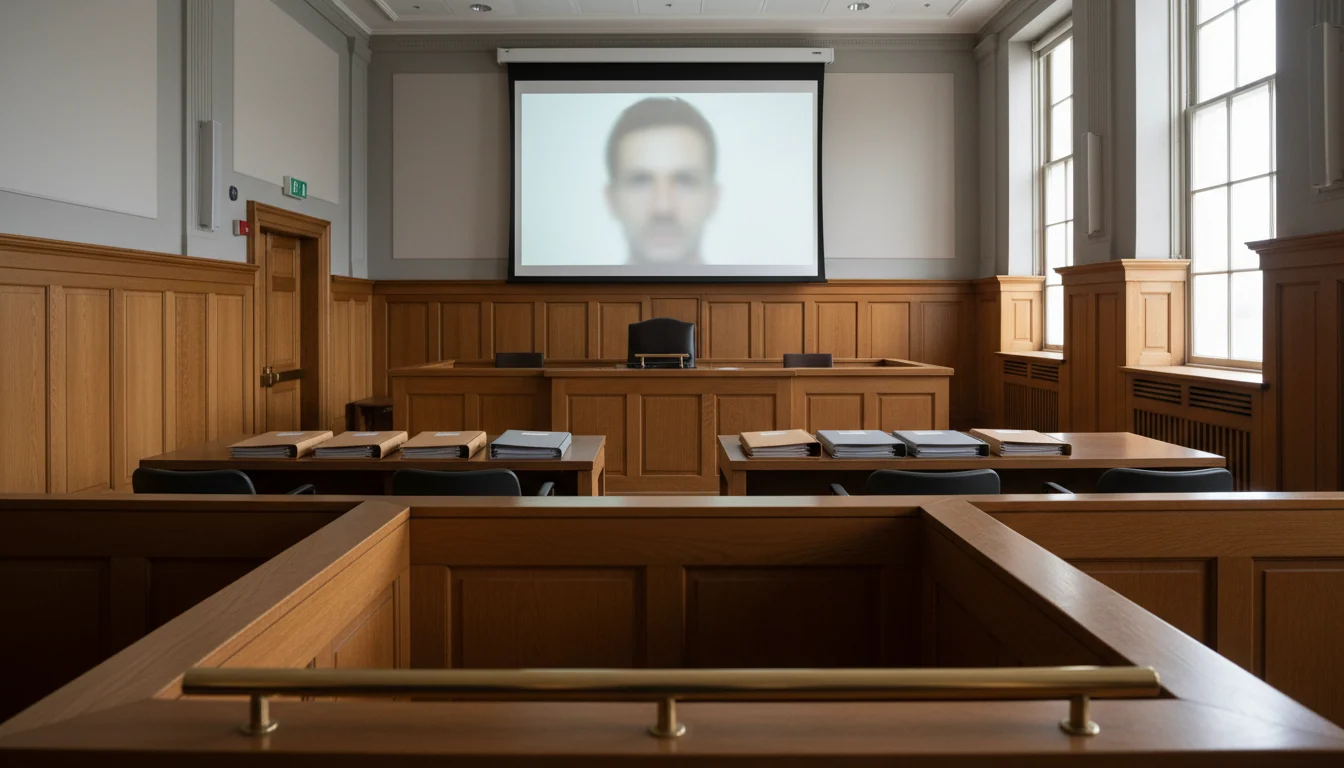
On 30 September 2026 the Arizona Court of Appeals upheld the conviction but quashed the sentence because an AI video let the deceased victim speak and forgive. The court held that such a synthetic depiction lacks the minimal reliability for sentencing and made the proceedings fundamentally unfair, even though the use of AI had been disclosed.
The case State v. Horcasitas concerns a manslaughter conviction arising from a fatal shooting during a 2021 road-rage incident. At the sentencing hearing the family presented, as a victim statement, a video in which the deceased victim appeared with his own face and voice to address the judge and seemed to forgive the perpetrator. Those images had been created by AI. The Arizona Court of Appeals, Division One upheld the manslaughter conviction but quashed the imposed sentence and sent the case back for resentencing.
What exactly did the Arizona Court of Appeals decide in the Horcasitas case?
The court distinguished two components of the same presentation. The court distinguished the genuine footage from the AI-generated depiction and treated the genuine footage in this presentation differently from the synthetic portion, which it found unreliable and prejudicial in the sentencing proceeding; the ruling did not establish a general rule governing all genuine recordings. According to the court, the AI portion presented imagined words, thoughts and expressions — including forgiveness — as though they came directly from the victim, while it was not a record of an actual event or of words spoken by the victim. That erased the interpretive difference between what the family believes and what the victim himself stated.
The court found that the sentencing judge took this synthetic depiction into account and that this made the proceedings fundamentally unfair. Independent reporting from the BBC on the quashed sentence confirms the facts and their public significance. Importantly, and in our analysis the crux of its scope: this is a ruling by an appeals court in one US state. It is not a nationwide ban on digital evidence and does not determine every future use of synthetic media in the courtroom.
Why does disclosing the use of AI not solve the reliability problem?
In this case the use of AI was known. Even so, the sentence fell. The analysis by Law Commentary discusses the reliability requirement at sentencing and the consequences of using this AI video. Our analysis: in this context, a synthetic persona speaking in the voice of the deceased did not add reliable information about an actual statement by him; instead, it added emotional persuasive force while presenting imagined content as if it came from a source that did not in reality speak.
In our assessment this is where the crux lies for every decision-maker. A label saying "made with AI" does not change what the audience sees: a human who appears to speak and forgive. In our analysis, when a depiction presents another person's imagined thoughts and expressions in the first person, disclosure alone does not establish reliability; in this case, the court found that the disclosure did not cure the problem. Transparency about the technique is something other than reliability of the content.
What does this ruling mean for judges, lawyers and decision-makers working with impact material?
Our analysis: this ruling shows that disclosure on its own need not resolve the reliability problem and that influencing the sentence can lead to a fresh assessment. For that reason, our recommendation is that defence counsel record, before the judge sees the material, whether each item is authentic, attributed or synthetic. Our analysis: because the court distinguished the genuine recordings from the synthetic recreation, the evidential status of each fragment within the same presentation should be assessed separately. For that reason it is advisable that the prosecutor states the provenance of each fragment and that the judge records the reliability assessment per fragment in the official record. Our analysis: because the judge treated the synthetic images as real and persuasive, the very prejudice arose that the defence challenged. For that reason it is advisable that defence counsel demands an attribution label that does not suggest the deceased actually spoke the words, and lodges an objection before the images are shown. Our analysis: for a possible later review it is wise that victim support and the court registry retain the original files, generation instructions, service or model used and chain of custody, so that a court can determine what was authentic and what was generated.
- Identify per fragment: authentic recording, attributed family statement or synthetic depiction.
- Retain the source data: original files, generation instructions, service or model and chain of custody.
- Demand an attribution label that does not pretend the deceased spoke the words himself.
- Test whether the material adds reliable information or only emotional force.
- Record the judge's reliability and prejudice assessment before the sentence is decided.
How do you distinguish an authentic recording, an attributed family statement and a synthetic depiction?
The court drew precisely this distinction, and it is usable outside the courtroom. Our analysis uses the following distinction: an authentic recording captures a real event or statement by the person themselves; an attributed family statement conveys what a bereaved relative believes or wants to say on behalf of the victim, but remains recognisable as the words of that relative; a synthetic depiction makes invented words and images appear as though they come from the person themselves. These three are not interchangeable as evidence, even if they feel emotionally the same.
For lawyers and administrators who make decisions on the basis of digital material, our analysis applies the same practical discipline as treating identity and channel as separate claims: the source of a statement should be tested separately. This connects to the broader theme of AI governance and decision-making, where the provenance of information carries more weight as AI makes the difference between real and fabricated invisible. Similar to separating detection from validation in attribution and to the shift from hallucination risk to a testable workflow requirement, the rule holds: whoever lets emotionally or legally weighty material carry weight must first be able to demonstrate its provenance.
Sources and references
Sources: The article relies on the ruling of the Arizona Court of Appeals in State v. Horcasitas, the official appellate docket of the Arizona Judicial Branch, and reporting by BBC News and legal analysis from Law Commentary.